Industry News
Home>Industry News>Sany signed an agreement with the United Nations OCHA.
Home>Industry News>Sany signed an agreement with the United Nations OCHA.
During the 2026 Geneva Humanitarian Network and Partnership Week, the SANY Foundation and the United Nations Office for the Coordination of Humanitarian Affairs (OCHA) formally signed a Memorandum of Understanding to establish an institutionalized cooperation framework for disaster preparedness, emergency response and early reconstruction.
Both parties stated that they will establish a long-term cooperation mechanism to integrate Sany Group's advantages in construction machinery equipment, technological innovation, and global service network into the international humanitarian response system, further improving the efficiency of global disaster response.
Eden Voussournau, Head of Crisis Response at OCHA, and Huang Tianli, Chairman of Sany France, signed the agreement on behalf of their respective companies, making the Sany Foundation the first Chinese corporate foundation to establish a formal partnership with OCHA.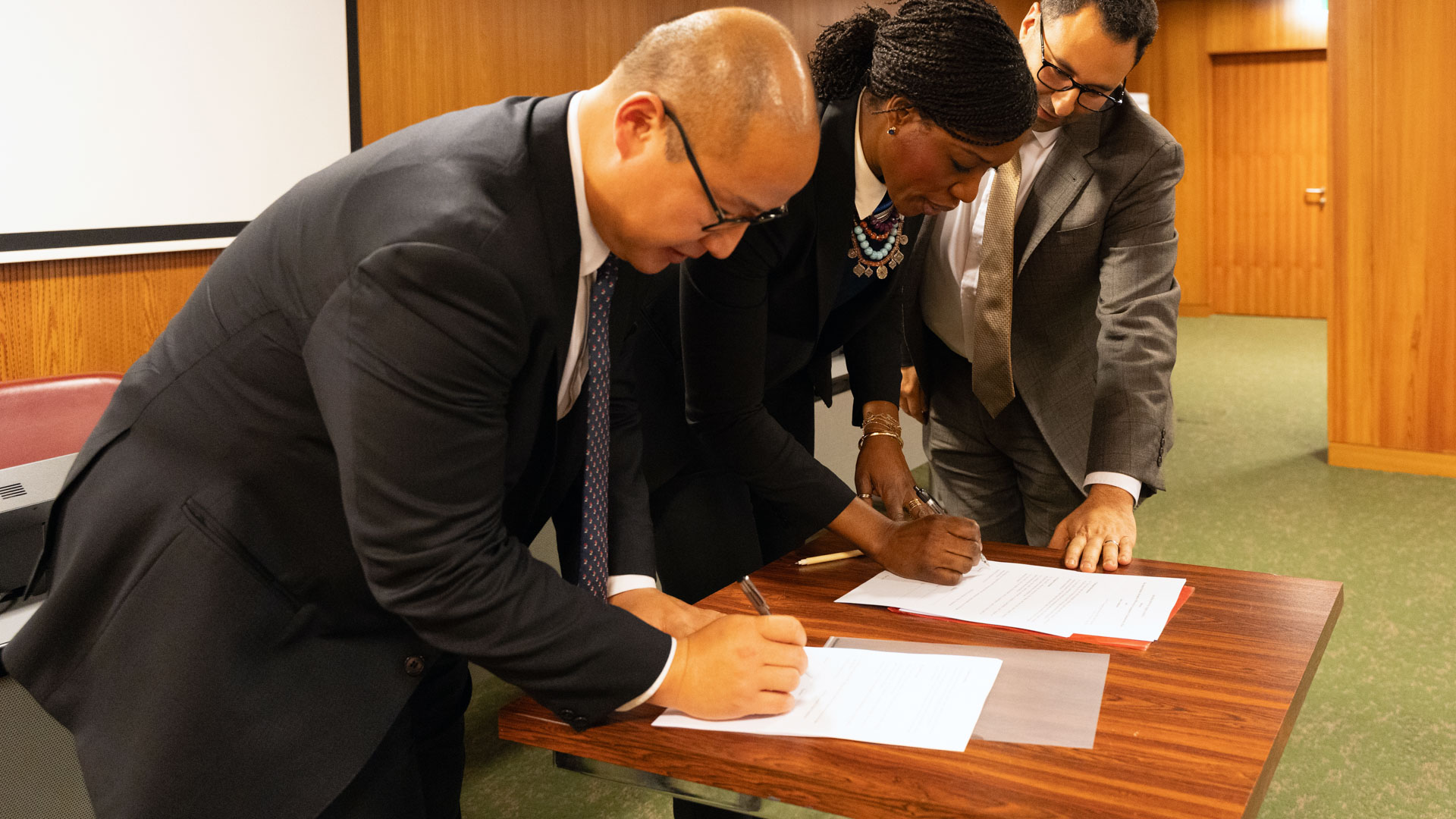
Karim Elbayar, project coordinator for the United Nations Connecting Business Initiative (CBI), pointed out: "Governments, businesses, and social organizations must collaborate to effectively respond to global disasters and safeguard community safety."
This signing is a core initiative by SANY to advance the "Global Construction Machinery Disaster Response Alliance." SANY Group will integrate its advantages in equipment, technology, and global network, inviting global humanitarian organizations, governments, and industrial partners to jointly build a resilient world and contribute to global humanitarian causes.
During the event, the SANY Foundation was also invited to participate in two thematic conferences hosted by the CBI, where they exchanged views on mechanisms for private sector participation in humanitarian action. SANY Foundation Secretary-General Shen Danxi, drawing on SANY Group's experience in earthquake relief efforts in Turkey and Myanmar, and flood relief efforts in Indonesia, systematically shared the role of engineering machinery in critical stages such as life search and rescue, rubble clearing, and road reopening, as well as the significant value of the private sector in global crisis response, leveraging its advantages in equipment, networks, and resources.